The Adventures of Shorty
Short silent Western series with Shorty Hamilton and his horse Beauty.

Mutual Film Corporation · Public domain
Shorty Hamilton first rode onto screens in 1914 with a short silent Western called *The Adventures of Shorty*, which also became the umbrella title for a whole series of two-reel comedies. Over the next three years, more than thirty "Shorty" films were released, all starring Hamilton as the same cowboy character—a little fellow who always had his remarkably smart horse, Beauty, by his side.
The series was originally produced by Thomas H. Ince, with many scripts written by veteran screenwriter C. Gardner Sullivan. The 1915 entry *Shorty's Ranch* was the last film from the original team. Directors included Francis Ford and Jay Hunt, and Hamilton's co-stars ranged from Enid Markey and Betty Burbridge to Charles Ray. The plots threw Shorty into all sorts of improbable comic situations: he inherited a harem, posed as a judge, joined the Secret Service, went to college, and tangled with loan sharks, ghosts, and moonshiners.
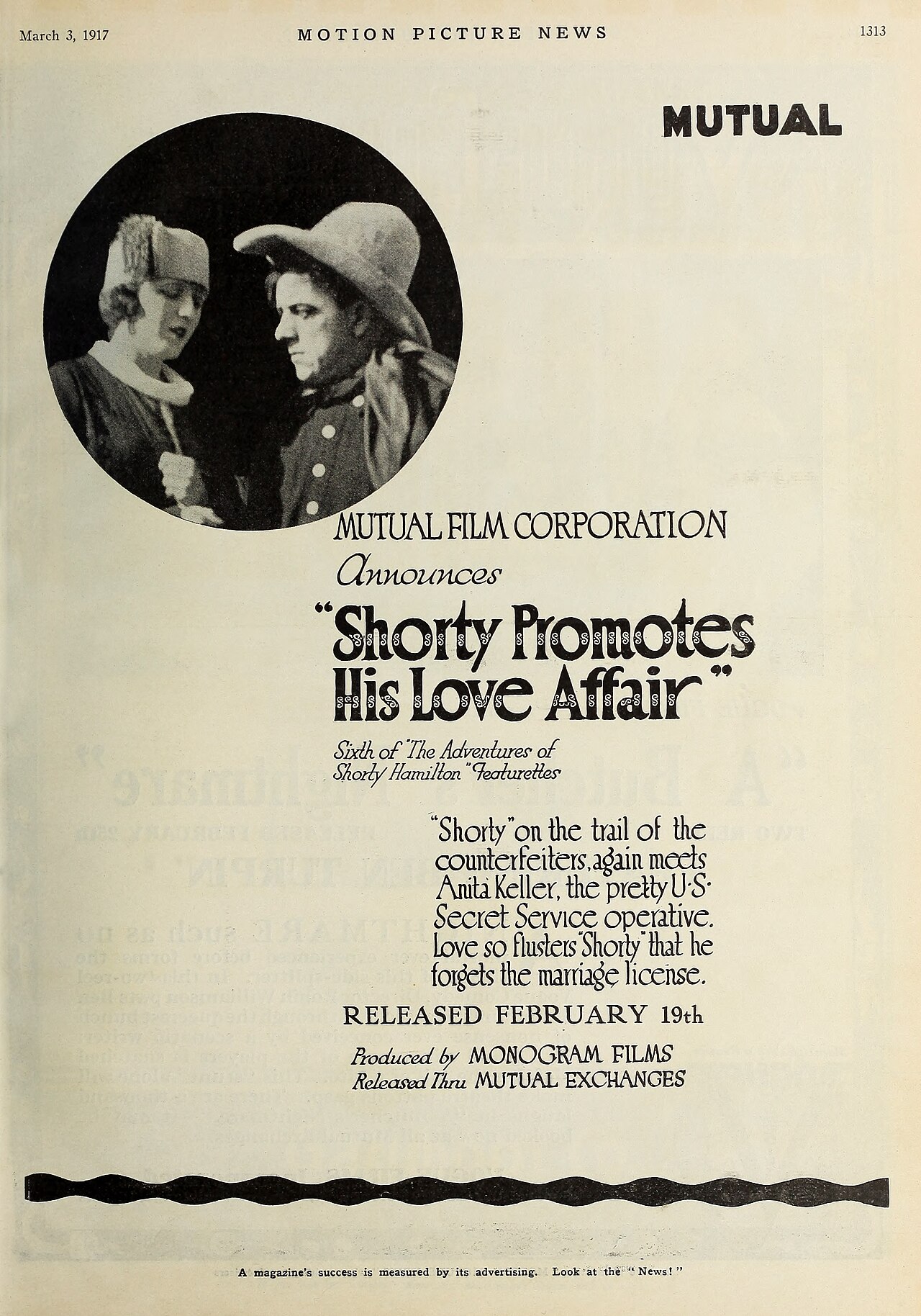
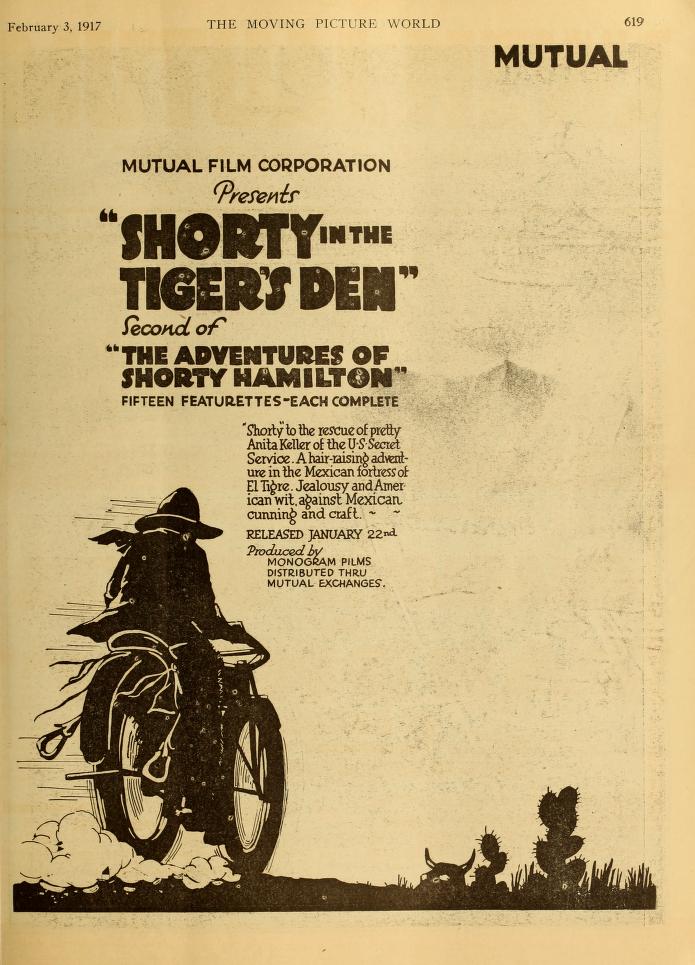
A newspaper reviewer in March 1917 praised Hamilton's performance in *Shorty in the Tiger's Den*, calling him "a fascinating little chap who makes you want to clasp him by the hand and call him friend." The critic noted his naturalness and ability to shift from laughter to suspense, adding that audiences would "shake with laughter" watching Shorty try to ride a motorcycle—more unruly than a bucking pony.
- field
- Silent film
- known_for
- Series of short Western comedies featuring Shorty Hamilton and his trained horse Beauty
- nationality
- American
Lore & Background
The Adventures of Shorty began in 1914 as a short silent Western film starring Shorty Hamilton. The series expanded to more than 30 two-reel titles released between 1914 and 1917, all featuring Hamilton as the 'Shorty' character, a cowboy with a remarkably intelligent trained horse named Beauty. The films were initially produced by Thomas H. Ince, and many were written by veteran screenwriter C. Gardner Sullivan. The 1915 entry 'Shorty's Ranch' was the last from the original producers. Directors included Francis Ford and Jay Hunt, and co-stars included Enid Markey, Betty Burbridge, and Charles Ray.
Reader's Guide
The Adventures of Shorty series represents a notable example of early American silent Western comedy, distinguished by its recurring character and trained horse. The films placed Shorty into improbable comic adventures—inheriting a harem, posing as a judge, joining the Secret Service, going to college, and confronting loan sharks, ghosts, and moonshiners. A March 1917 newspaper reviewer praised Hamilton's naturalness and ability to evoke laughter and suspense. The series' revival by Monogram Pictures in 1917 extended its run, with titles such as 'Shorty in the Tiger's Den' and 'Shorty Goes to College.' The films' blend of Western settings and slapstick comedy contributed to the era's popular entertainment, though the series is now largely remembered by film historians.
Did You Know?
- More than 30 two-reel 'Shorty' titles were released between 1914 and 1917.
- Shorty Hamilton's character had a trained horse named Beauty.
- A March 1917 reviewer described Hamilton as 'a fascinating little chap' who never overdoes anything.
Origins & Production History
The Adventures of Shorty launched in 1914 as an American short silent Western starring Shorty Hamilton, and the name subsequently became the umbrella title for the entire franchise of similar shorts that followed. The first wave of productions was backed by Thomas H. Ince, with much of the screenwriting entrusted to veteran writer C. Gardner Sullivan. That original run carried through 1915, and "Shorty's Ranch" served as the final entry before the producers stepped away. After roughly a year of silence, Monogram Pictures revived the series in January 1917, carrying it forward for the remainder of that year. Directors who guided various episodes included Francis Ford and Jay Hunt. Hamilton was never a solo act on screen; his regular ensemble partners included Enid Markey, Betty Burbridge, and Charles Ray, who fleshed out the supporting world around the cowboy lead.
The Character and His Comic World
Every "Shorty" picture revolved around Hamilton's cowboy and his horse Beauty, an animal singled out for her remarkable intelligence and her role as a trained partner in the action. The writers threw the character into a dizzying parade of improbable comic predicaments: inheriting an entire harem, impersonating a judge, enlisting in the Secret Service, enrolling at college, and squaring off against a rogues' gallery that spanned loan sharks, ghosts, moonshiners, and even a jungle specter. The two-reel format kept each episode a compact, self-contained burst of farce and mild peril. Beyond the horse, Hamilton shared the screen with Enid Markey, Betty Burbridge, and Charles Ray across the more than thirty titles released between 1914 and 1917. The sheer variety of premises—from cannibals to wireless mysteries to a lottery king—shows just how broadly the writers stretched the character's universe while keeping the core formula intact.
Hamilton's Performance and Critical Reception
A March 1917 newspaper reviewer captured the audience's affection for Hamilton in language that reads almost like a personal letter. He called the actor "a fascinating little chap" whose extreme naturalness was genuinely refreshing, noting that Hamilton never over-did anything. The reviewer praised his ability to shift registers effortlessly, making a viewer laugh or driving them to "the extreme pinnacle of nervous anticipation" within the same breath. As a concrete example, the review highlighted the motorcycle sequence in "Shorty in the Tiger's Den," where Hamilton's character attempts to ride a machine that proves even more uncontrollable than a bucking pony—a bit the writer predicted would make audiences "shake with laughter." This critical snapshot, taken during the Monogram Pictures revival, suggests that by 1917 the character had accumulated a devoted following who responded to Hamilton's gift for physical comedy and understated charm.
Scope and Prolific Output
Between 1914 and 1917 the "Shorty" franchise delivered more than thirty two-reel titles, a remarkable volume for the short-film era. The episode list reads like a catalog of escalating absurdity: Shorty escapes marriage, trips to Mexico, encounters Sherlock Holmes, inherits a harem, joins the Secret Service, goes to college, hooks a loan shark, traps a lottery king, bags bullion thieves, trails moonshiners, lays a jungle ghost, and unearths a Tartar. The 1914 entries alone number eleven, showing how quickly the format found its rhythm under Ince's production banner and Sullivan's pen. The 1917 Monogram run added another fourteen-plus titles in a single year, demonstrating the franchise's commercial durability. Each film was a compact, self-contained narrative built around the same core ingredients—Hamilton, Beauty the horse, and a fresh comic predicament—yet the sheer range of premises kept the formula feeling perpetually new to its audiences.
Gallery
Frequently Asked Questions
What is The Adventures of Shorty?
It is a run of silent two-reel Western comedies that debuted in 1914 and followed a small-statured cowboy and his exceptionally clever horse, Beauty. The umbrella title covered the entire series of shorts released over the next few years.
Who stars in The Adventures of Shorty and who is Beauty?
Shorty Hamilton played the eponymous cowboy in every installment of the series. His on-screen partner was a trained horse called Beauty, whose intelligence was a recurring comedic element in the films.
Who produced and wrote The Adventures of Shorty?
Thomas H. Ince produced the series, while veteran screenwriter C. Gardner Sullivan wrote many of the scripts. The 1915 entry *Shorty's Ranch* was the final film to come from that original creative team.
How long did The Adventures of Shorty series last and how many films did it include?
Starting in 1914, more than thirty two-reel shorts were released over roughly three years. Each one kept Hamilton in the same cowboy role with Beauty at his side, making it one of the longer-running character-driven short series of the silent era.
Why is The Adventures of Shorty significant to early Western comedy?
It helped establish the formula of a recurring character and animal sidekick anchoring a string of short comedies in the Western genre. For 1910s audiences, the Hamilton-and-Beauty pairing became a recognizable brand that audiences could expect to see in theaters regularly.
More in Short film series 1-24
Spotted an error? Know more?
This is a living reference — every entry is fact-audited, and reader corrections feed straight into our audit queue. Suggest an edit · See this site's audit record