Canada Carries On
A wartime propaganda film series that became a Canadian institution.

Dwayne Reilander · CC BY-SA 4.0
From 1940 to 1959, the National Film Board of Canada produced a series of short films called *Canada Carries On* (known in French as *En avant Canada*). It began as wartime propaganda meant to lift spirits, but after the Second World War ended, the Wartime Information Board stopped funding it. The series continued anyway as a collection of theatrical shorts that mixed newsreels with animated pieces.
Stuart Legg produced the series and directed many of its early films. The first, *Atlantic Patrol*, came out in April 1940 and covered the Royal Canadian Navy’s work protecting convoys from Halifax to the United Kingdom against U-boat attacks. One of the most famous entries was Legg’s *Churchill’s Island*, released in Canada in June 1941, which won the first Academy Award for Best Documentary (Short Subject).
Most films featured narration by Lorne Greene, a CBC news announcer. His deep, resonant voice earned him the nicknames “The Voice of Canada” and, when he read grim battle statistics, “The Voice of Doom.” The success of *Canada Carries On* led to another NFB series, *The World in Action*, which aimed at international viewers.
The series was shot in 16mm for theatres. Each film played in about 800 Canadian theatres over six months, distributed by Columbia Pictures. An arrangement with Famous Players theatres ensured nationwide screenings. After that run, the films were loaned on 16mm to schools, libraries, church basements, and factories for another year or two, and also went to film libraries run by universities and provincial authorities. In total, 199 films were made before the series ended in 1959.
The French-language version, *En avant Canada*, reached Quebec and New Brunswick through France Film Distribution in about 60 theatres. Each year, eight to 12 French titles were produced—some were translations of English films, others were original. This branch produced 173 French titles by 1959.
Internationally, some films were sent to Australia, the UK, the United States (via Telenews), India (through Fox Film Corporation), and the West Indies (via Inter-continental). These tended to cover global rather than Canadian topics. One example, *Warclouds in the Pacific*, came out just a week before the attack on Pearl Harbor and warned of an imminent Japanese assault.
- field
- Film series
- nationality
- Canadian
- years_active
- 1940–1959
- producer
- Stuart Legg
- notable_film
- Churchill's Island (1941)
- total_films
- 199 English, 173 French
Lore & Background
The series was initially produced by Stuart Legg, who also directed many early films. The first film, Atlantic Patrol, released in April 1940, covered the Royal Canadian Navy's convoy protection from Halifax to the UK. One of the most famous films, Churchill's Island, released in June 1941, won the first Academy Award for Best Documentary (Short Subject). The narrator for many films was Lorne Greene, known as 'The Voice of Canada' for his sonorous recitation, and 'The Voice of Doom' when reading grim battle statistics.
Reader's Guide
Canada Carries On was a landmark series in Canadian cinema, serving as both wartime propaganda and a post-war theatrical staple. Its 199 English and 173 French titles were distributed across Canada through Columbia Pictures and Famous Players theatres, reaching approximately 800 theatres over six months. After theatrical runs, films were made available to schools, libraries, and factories on 16mm. The series inspired a second NFB series, The World in Action, aimed at international audiences. Internationally, films were distributed in Australia, the UK, the US, India, and the West Indies, often focusing on international issues. One notable international title, Warclouds in the Pacific, was released just one week before the attack on Pearl Harbor, warning of an imminent Japanese attack. The series ended in 1959.
Did You Know?
- The first film in the series was Atlantic Patrol, released in April 1940.
- Churchill's Island won the first Academy Award for Best Documentary (Short Subject).
- Narrator Lorne Greene was nicknamed 'The Voice of Canada' and 'The Voice of Doom'.
- The series inspired a second NFB series, The World in Action.
Wartime Origins and a Nineteen-Year Run
Conceived in the urgent atmosphere of the early 1940s, Canada Carries On (En avant Canada) was a short-film series produced by the National Film Board of Canada that ran from 1940 through 1959. Its original purpose was straightforward: to serve as morale-boosting propaganda for a nation drawn into the Second World War. During the conflict, the series received its financial backing from the Wartime Information Board, an agency dedicated to wartime information and public communication. When the guns fell silent, that funding dried up, yet the program refused to disappear. Instead, it reinvented itself as a continuing NFB series of theatrical shorts, broadening its palette to include newsreels and animated pieces alongside live-action features. Over its full nineteen-year run, the series produced a total of 199 English-language films, a remarkable output that testifies to how deeply the project had taken root in Canadian cultural life well beyond the emergency that first inspired it.
Creative Vision and the Voice of a Nation
At the helm of the series stood Stuart Legg, who both produced and directed many of the early entries. His opening film, Atlantic Patrol, hit Canadian screens in April 1940 and focused on the Royal Canadian Navy's vital task of escorting convoys from Halifax to the United Kingdom while fending off U-boat attacks. Two years later, Legg delivered what would become the series' most celebrated achievement: Churchill's Island, released in June 1941, which went on to claim the very first Academy Award ever given for Best Documentary (Short Subject), placing a Canadian production on the global stage. Behind the camera, however, the series found its most recognizable identity in the voice of Lorne Greene, a radio news announcer at the CBC whose deep, resonant delivery became inseparable from the films. Audiences dubbed him "The Voice of Canada," and when he read the grim toll of battle casualties, the nickname sharpened to "The Voice of Doom." Greene's narration gave the series a unifying emotional thread that no single director could have matched.
A National Circuit: Reaching Every Corner of the Map
Canada Carries On was engineered for maximum domestic reach. Each short was produced on 16mm film for the theatrical market and rolled out across roughly 800 screens nationwide over a six-month window. Columbia Pictures handled distribution, and the NFB secured a special arrangement with the Famous Players theatre chain to guarantee that audiences from coast to coast could catch the films. Once the theatrical tour concluded, the shorts did not simply vanish. They were lent out on 16mm to schools, public libraries, church basements, and factory canteens, extending each film's public life by another year or two. University and provincial film libraries also received copies, ensuring the series remained a fixture in Canadian communities long after the marquee lights dimmed. In French-speaking regions, the parallel series En avant Canada followed a similar but more modest circuit: France Film Distribution placed eight to twelve new titles each year in approximately 60 theatres across Quebec and New Brunswick, building a corpus of 173 French-language films by the time the program closed in 1959.
Beyond the Borders and Beyond the War
The series' influence stretched well past Canadian shores. Select titles—typically those addressing international rather than purely domestic issues—were exported to Australia, the United Kingdom, the United States (via Telenews), India (through Fox Film Corporation), and the West Indies (through Inter-continental). One striking example was Warclouds in the Pacific, which reached audiences just one week before the Japanese attack on Pearl Harbor, serving as a prescient warning of the threat looming in the Pacific. The commercial and cultural success of Canada Carries On also directly inspired the NFB to launch a second series, The World in Action, specifically tailored for international audiences. In this way, a wartime propaganda initiative launched in 1940 evolved into a broader institutional strategy for Canadian filmmaking. The fact that the series continued for fourteen years after the war ended, and that it spawned an international sibling, underscores how a project born in urgency grew into a durable pillar of the NFB's output.
Gallery



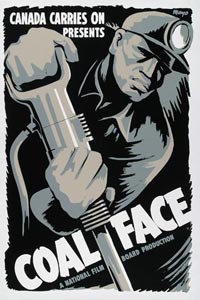
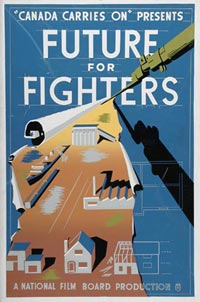
Frequently Asked Questions
What is Canada Carries On?
It is a Canadian short-film series produced by the National Film Board of Canada that ran from 1940 through 1959. Originally conceived as wartime propaganda to lift public morale, it later evolved into a theatrical format blending newsreel footage with animated segments.
Who produced and directed Canada Carries On?
Stuart Legg was the series' producer and also directed many of its early entries. He was the principal creative force guiding the collection during its formative years.
How many films did the Canada Carries On series produce?
Over its nearly two-decade run, the series yielded 199 English-language shorts and 173 French-language counterparts. That volume makes it one of the most prolific short-film series in Canadian history.
What happened to Canada Carries On after World War II ended?
The Wartime Information Board, which had been the series' original financial backer, stopped funding it once the war was over. Rather than folding, the series reinvented itself as a theatrical short mixing newsreel content with animation and continued producing films until 1959.
What was the first film in the Canada Carries On series?
The series opened with Atlantic Patrol, released in April 1940, which spotlighted the Royal Canadian Navy's convoy-escort work out of Halifax. It set the early tone of the series by highlighting Canada's direct military contributions to the war effort.
More in Short film series 1-24
Spotted an error? Know more?
This is a living reference — every entry is fact-audited, and reader corrections feed straight into our audit queue. Suggest an edit · See this site's audit record